

Best Interactive Stories for 6-Year-Olds
Table of Contents
- Why Interactive Stories Matter for 6-Year-Olds
- Top Interactive Stories That Spark Imagination
- Interactive Storytelling Techniques for Parents
- Screen-Free Educational Activities for Kids Beyond Reading
Last Updated: August 23, 2026
Why Interactive Stories Matter for 6-Year-Olds
Interactive stories for 6 year olds build the foundation for lifelong literacy development. At this age, children are transitioning from picture books to early chapter books, and their brains are primed for active participation (peer-reviewed research). When kids physically engage with a story, turning pages, making choices, solving puzzles, or acting out scenes, they construct meaning and develop critical thinking skills. Choice-driven narratives let children steer the plot, making them invested in discovering what happens next.
Top Interactive Stories That Spark Imagination
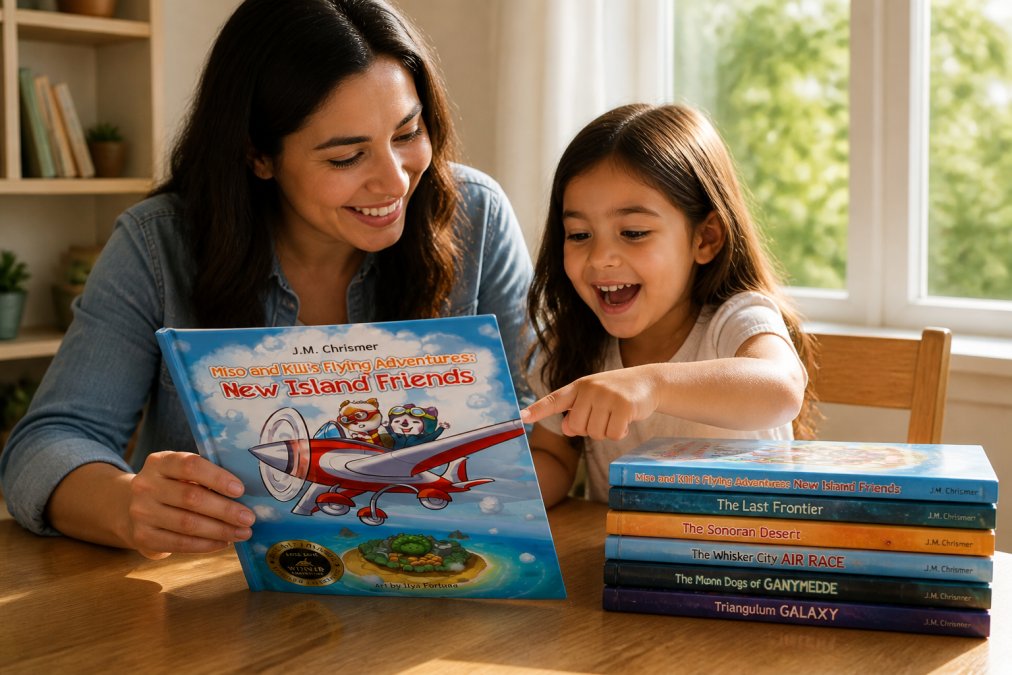
The best interactive stories for 6 year olds combine engaging characters, sensory storytelling, and narrative structure that rewards active participation. Miso & Kili's Adventures stands out because the stories feature two adventurous pilot cats whose journeys encourage kids to imagine themselves as explorers. The Miso & Kili's Flying Adventures: Complete Series Softcover Set (Books 1-6) bundles all six books together, following Miso and Kili from tropical islands to the far reaches of space. Each book includes the cats' real paw prints, a tactile touch that makes the reading experience feel personal and special.


For extended engagement, the New Island Friend Activity Book Bundle pairs stories with coloring pages, puzzles, and activities that extend the narrative. The Miso & Kili Activity Book Bundle, 3 Adventures in One! offers additional screen-free educational value with three complete activity books covering different settings.

Interactive Storytelling Techniques for Parents
Transform ordinary reading time into active learning by reading with your child rather than to them. Pause frequently to ask open-ended questions like "What do you think Miso will do next?" instead of "What happened?" These prompts build critical thinking and make children feel their ideas matter.
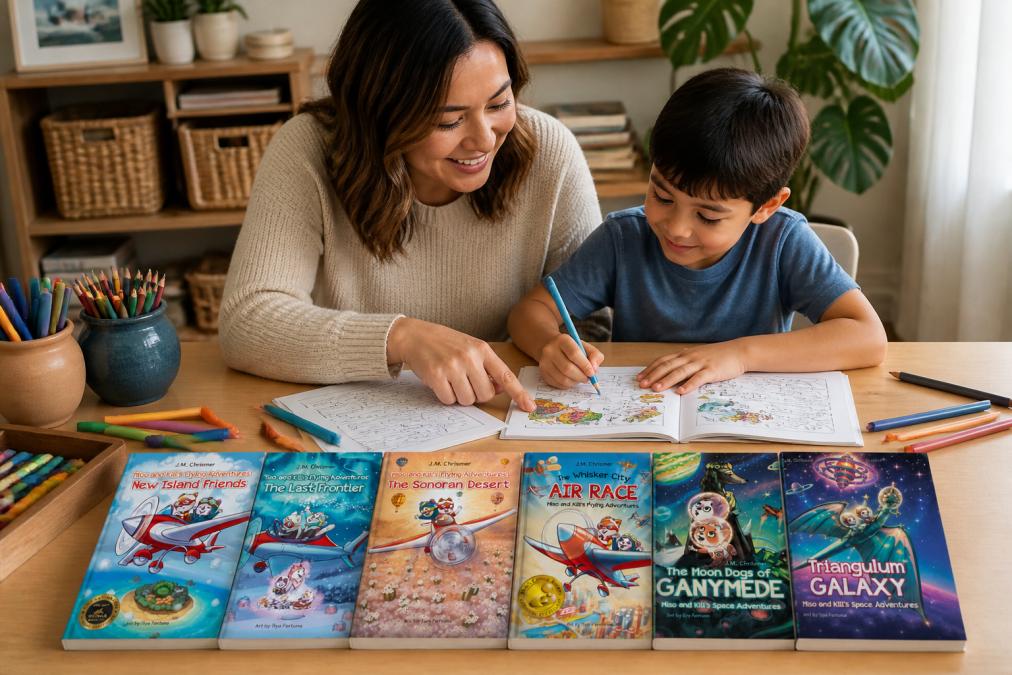
Physical movement during reading engages reluctant readers and helps kinesthetic learners. Pause mid-story to act out a scene together, or have your child draw what they think happens next before turning the page. Pair reading with hands-on activities immediately afterward, if you've just finished a chapter about an island adventure, move straight to the activity book and let your child color or solve puzzles related to that section.
Screen-Free Educational Activities for Kids Beyond Reading
The most effective early childhood education combines multiple modalities. After finishing an interactive story, children benefit from extended play that builds on narrative themes. If they've read about explorers, create a treasure hunt at home. If the story involved problem-solving, introduce age-appropriate puzzles or building challenges.
Join the Miso & Kili Co-Pilot Club! →
The digital activity book downloads available from Miso & Kili's Adventures (like The Last Frontier Activity Book, New Island Friends Activity Book, and The Sonoran Desert Activity Book) offer flexibility, you can print pages as needed and repeat favorites.
| Activity Type | Duration | Literacy Skill Built | Best For |
|---|---|---|---|
| Reading aloud with pauses | 15-20 min | Comprehension, prediction | Daily routine |
| Coloring/activity pages | 20-30 min | Visual literacy, sequencing | After reading |
| Acting out scenes | 10-15 min | Narrative understanding, confidence | Active learners |
| Puzzle-solving | 15-25 min | Problem-solving, focus | All learners |
| Creative retelling | 10-20 min | Language development, memory | Verbal learners |
Combine these activities with outdoor exploration, building projects, and creative art for integrated learning that strengthens both literacy and cognitive development.
Interactive stories for 6 year olds work best when they combine engaging narratives with hands-on activities that invite participation. Miso & Kili's Adventures delivers exactly this, award-winning stories featuring adventurous characters, paired with activity books that extend learning beyond the page. The complete series, activity bundles, and digital downloads give families flexibility to build reading confidence and spark imagination. Join the Miso & Kili Co-Pilot Club to access monthly missions that keep the adventure alive long after the final page.
Frequently Asked Questions
Q: What makes interactive stories different from regular picture books for 6-year-olds?
A: Interactive stories invite active participation through choice-driven narratives, tactile elements, and hands-on engagement rather than passive listening. These books encourage children to make decisions that affect the plot, touch textures, lift flaps, or solve puzzles. This active participation strengthens comprehension skills, builds confidence, and deepens story engagement, transforming reading into a collaborative experience between parent and child.
Q: How do interactive storytelling techniques for parents improve a child's literacy development?
A: Interactive storytelling techniques, like asking comprehension questions, pausing for predictions, and encouraging physical movement during stories, activate multiple learning pathways. These methods build phonemic awareness, expand vocabulary, and develop critical thinking. When parents pause to ask 'What do you think happens next?' or invite children to act out scenes, children transition from passive listeners to active participants, reinforcing narrative structure and story comprehension.
Q: Are screen-free educational activities for kids as effective as digital learning tools?
A: Yes. Screen-free activities like interactive books, puzzles, and hands-on storytelling build deeper cognitive engagement because children must generate their own mental images and solutions. Combined with parental interaction, these activities also build stronger emotional connections and improve social-emotional development.
This article was written using GrandRanker