

Build Confidence in Elementary Students: 3 Proven Steps
Table of Contents
- Confidence Building Activities for Kids That Actually Work
- How to Help a Shy Child Gain Confidence
- Meaningful Gifts for 7 Year Olds That Build Confidence
- Frequently Asked Questions
Last Updated: September 15, 2026
Confidence Building Activities for Kids That Actually Work
Confidence accumulates through small, repeated experiences of "I tried, and I handled it." The best confidence building activities for kids let them practice competence in low-stakes settings where mistakes cost nothing.
Confidence accumulates through small, repeated experiences of "I tried, and I handled it." The best confidence building activities for kids let them practice competence in low-stakes settings where mistakes cost nothing.
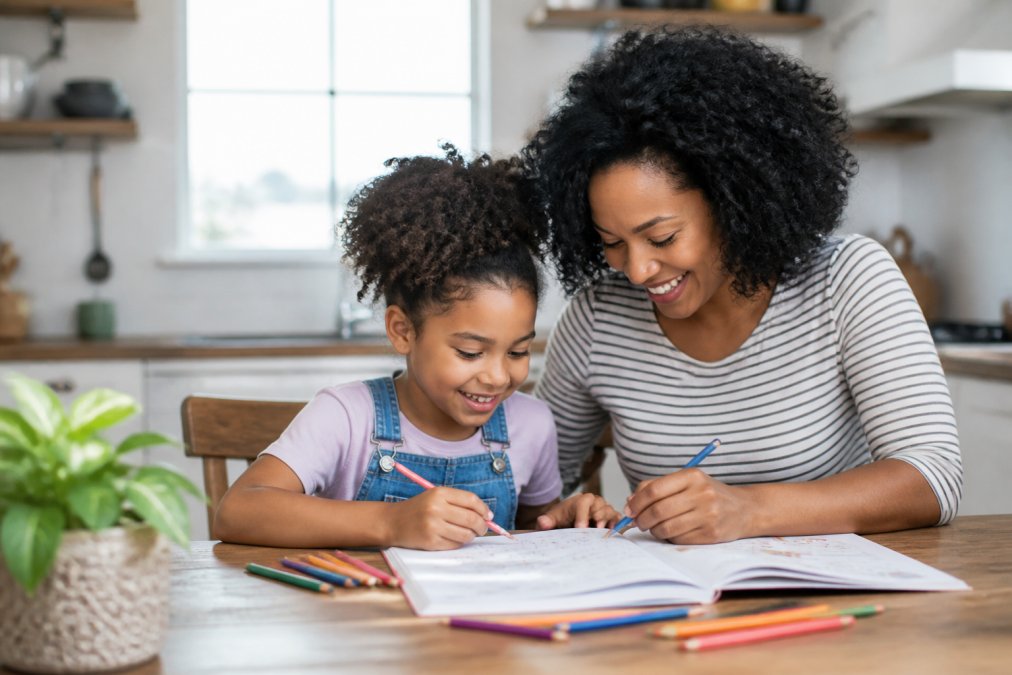
A common mistake is treating confidence as a reward for success. It's better understood as a byproduct of effort that a child can see and name. The American Academy of Pediatrics guidance on building resilience in children frames this well: children develop resilience when adults coach them through challenges rather than removing the challenges entirely.
The best activities have three ingredients: a clear goal, a chance to struggle and recover, and a moment where the child names what they did well. That third step gets skipped, naming the process ("you kept going even when the puzzle got hard") is what sticks.
How to Help a Shy Child Gain Confidence
Stop trying to make shyness disappear and start building the child's tolerance for small social risks. Shyness is a temperament trait, not a defect, and treating it as a problem usually backfires (childmind.org).
What works is gentle, graduated exposure: a child who won't speak in a group might nod at a classmate, then answer one question with one word, then read a sentence aloud to a sibling. Each success makes the next step feel less like a cliff.
Practical moves that help:
- Scout ahead. Arrive early so your child settles in before the room fills up.
- Give a script. "When Grandma asks about school, say 'it was good, we did a science project.'"
- Rehearse at home. Role-play the exact scenario, awkward parts included.
- Resist rescuing. If your child pauses, wait five seconds before jumping in.
- Debrief without grading. Ask "what felt okay?" not "did you have fun?"
The Child Mind Institute's resources on shyness and social anxiety in children makes an important distinction here: a shy child who warms up over time is in a different place than a child whose anxiety is blocking daily life. If a child is refusing school, losing sleep, or dropping activities they used to enjoy, that's a signal to talk to a pediatrician rather than push harder at home.
Meaningful Gifts for 7 Year Olds That Build Confidence
A gift can quietly tell a child "you are capable." The best meaningful gifts for 7 year olds hand over tools, not trophies: a tool says you're ready for the next thing.
Join the Miso & Kili Co-Pilot Club! →
Seven-year-olds read independently but still love being read to, are proud of finishing things, and notice when something is "for babies." Hand them something that stretches them slightly, with support built in, and you get absorption.
Gifts that tend to land well at this age:
- Activity books tied to a story. A maze is a maze until it's a route across a mysterious island.
- Real tools sized for small hands. Colored pencils, a beginner's camera, a magnifying glass, a compass.
- Building kits with open-ended pieces. Not a single-result model, but something that can become five different things.
- Books that ask the child to do something. Look-and-find books, choose-your-path stories, books with maps and codes.
For a seven-year-old who loves animals, adventure, or flying, our New Island Friend Activity Book Bundle pairs a storybook with a matching activity and coloring book for $24.99. The 3 Adventures in One bundle collects all three activity books for the same $24.99, and the single New Island Friend Activity Book runs $11.99.


The wrapping matters less than the follow-up: a gift an adult does alongside them, badly and enthusiastically, beats one a child works through alone.
Confidence in elementary students grows from repeated proof that effort leads somewhere, easier to build when tools are in a child's hands and an adult is nearby, not hovering.
Frequently Asked Questions
What are the 5 C's of confidence for children?
The 5 C's of confidence for children are competence, confidence, connection, character, and caring. These pillars help kids feel capable and valued. You can build them at home by giving your child age-appropriate tasks, praising effort over outcome, and creating routines that include family time. Reading stories and doing hands-on activities together reinforces each C naturally without pressure.
How can parents help build confidence at home?
Start with small, achievable goals and specific praise. Instead of saying 'good job,' name what you saw: 'You kept trying even when the puzzle was hard.' Let your child make simple choices, like picking a book or planning a snack. Screen-free activities such as coloring, journaling, or reading together give kids a safe space to practice skills and bounce back from mistakes.
How does reading and imaginative play impact child confidence?
Reading and imaginative play let children try on new roles and solve problems without real-world stakes. When a character faces a challenge and persists, kids absorb that model. Activities like coloring books, puzzles, and story-based missions give them a finished product to feel proud of. That sense of 'I did this' is one of the most reliable ways to build confidence in elementary students.