

Best Educational Subscription Boxes for Kids 2026
Table of Contents
- Top Educational Subscription Boxes for Kids in 2026
- STEM Subscription Boxes for Kids: What to Expect
- Benefits of Monthly Learning Boxes for Child Development
- How to Choose a Subscription Box for Kids
Last Updated: August 14, 2026
Top Educational Subscription Boxes for Kids in 2026
Educational subscription boxes spark curiosity outside the classroom through age-appropriate, screen-free activities that build real skills. Options range from hands-on STEM projects to literacy programs and project-based learning bundles designed to complement homeschool curriculum.

Quick Picks:
- Best for Literacy and Adventure: Miso & Kili's Adventures Co-Pilot Club, screen-free monthly missions tied to award-winning storybooks
- Best for STEM Projects: Hands-on science and engineering kits for elementary ages
- Best for Toddlers and Preschoolers: Sensory play and fine motor skill activity boxes
- Best for Homeschooling Families: Curriculum-aligned project-based learning kits
1. Miso & Kili's Adventures Co-Pilot Club, Best for Literacy and Creative Confidence
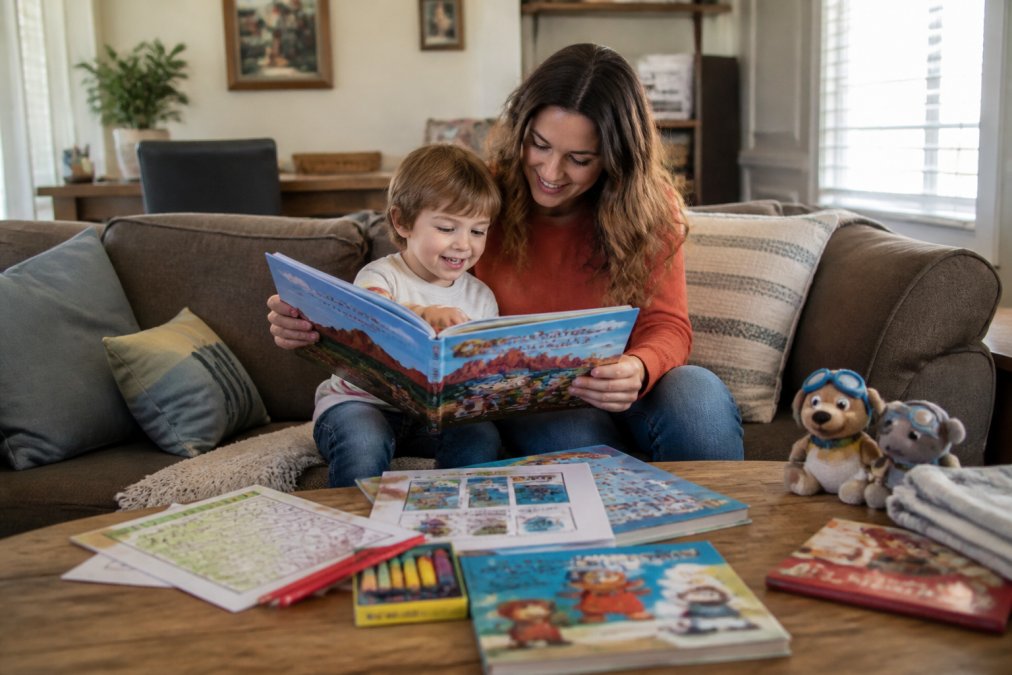
The Co-Pilot Club combines screen-free reading with imaginative play. Monthly missions connect to the Miso & Kili's Flying Adventures series, where two adventurous pilot cats explore destinations from tropical islands to outer space. Children become part of the stories through interactive activities that reinforce literacy and creative expression.
The New Island Friend Activity Book Bundle ($24.99) pairs the award-winning storybook with a full activity and coloring book. Kids solve puzzles, color scenes, and complete creative prompts that extend the story.

For families committing to the full series, the Miso & Kili's Flying Adventures: Complete Series Softcover Set (Books 1-6) costs $74.95. The Books 1-3 Bundle at $39.99 is the smarter starting point.

What works: Stories embed problem-solving and values like cooperation and resilience without feeling instructional. Homeschooling families use activity books as curriculum supplements while keeping them genuinely fun.
What to watch: The Co-Pilot Club works best for ages 4-10. Advanced readers may move through books quickly; pairing storybooks with activity books extends engagement.
| Format | Price | Best For |
|---|---|---|
| Individual activity book | $9.99 | Trying one adventure first |
| Activity Book Bundle (3 books) | $24.99 | Screen-free travel activity kit |
| Books 1-3 Bundle | $39.99 | Starting the full series |
| Adventure Pack (book + plushie + stickers) | $39.99 | Gift-ready unboxing experience |
| Complete Series (Books 1-6) | $74.95 | Committed readers and homeschoolers |
2. STEM Subscription Boxes, Best for Science and Engineering Exploration
STEM boxes focus on hands-on learning through experiments, engineering challenges, and problem-solving. The best options are curriculum-aligned and include clear scaffolding that explains the science in age-appropriate language. According to the National Science Teaching Association's position on hands-on science learning, project-based learning significantly improves long-term retention of scientific concepts compared to passive instruction.
What to look for:
- Clear learning outcomes stated per project
- Age-appropriate complexity that challenges without frustrating
- Materials minimizing single-use plastic waste
- Activities requiring critical thinking, not just following steps
Most STEM boxes target elementary ages (6-12), with separate tracks for different developmental stages.
3. Arts and Crafts Subscription Boxes, Best for Creative Expression
Arts and crafts boxes prioritize creative expression and fine motor skill development. The strongest combine guided projects with open-ended prompts, giving children structure first, then freedom.
Neurodivergent children often thrive with arts-based kits because sensory play elements can be regulating. Choose boxes offering flexible completion methods rather than requiring a single correct approach.
4. Literacy and Reading Programs, Best for Building a Love of Books
Literacy-focused boxes pair curated content with activities that deepen comprehension and emotional connection to stories. According to the American Library Association's research on early literacy, children who engage with books through discussion and extension activities show stronger reading retention than passive readers.
For homeschooling families, literacy boxes with discussion guides, writing prompts, and cross-subject connections function as genuine curriculum supplements.
Signs a literacy box is worth the investment:
- Stories feature diverse characters and settings
- Activity components reinforce comprehension, not just coloring
- Content is genuinely age-appropriate
- Subscription includes enough variety across multiple months
5. Geography and World Culture Kits, Best for Global Awareness
Geography-focused boxes introduce children to world cultures, languages, foods, and traditions through hands-on exploration. The most effective kits combine curated content (maps, artifacts, recipes, stories) with project-based activities requiring active engagement.
STEM Subscription Boxes for Kids: What to Expect
STEM subscription boxes are the fastest-growing category, though quality varies considerably. Parents with children at different developmental stages often find a single subscription can't serve everyone well.
What a good STEM box includes:
- 2-4 projects per month with clear instructions
- Background reading explaining the science concept
- Materials sufficient to complete all projects
- Challenge extensions for quick finishers
Many kits generate significant packaging waste. Families prioritizing environmental values should ask providers directly about packaging practices. For screen-free learning, STEM boxes are among the most effective tools available. According to the American Academy of Pediatrics on screen-free play, hands-on play supports cognitive development in ways screen-based learning doesn't replicate.
Budget-friendly alternative: Try one-time purchases like the Miso & Kili Activity Book Bundle (3 Adventures in One) at $24.99 before committing to monthly subscriptions.

Benefits of Monthly Learning Boxes for Child Development
Monthly learning boxes work because consistency builds anticipation and associates learning with excitement, shaping how children relate to education long-term.
Join the Miso & Kili Co-Pilot Club! →
Cognitive growth: Project-based learning requires planning, execution, and evaluation, building executive function skills alongside subject knowledge, more effective for long-term retention than passive consumption.
Fine motor skills: Arts, crafts, coloring, and hands-on assembly develop coordination underpinning handwriting and drawing. Activity books requiring detailed work are particularly effective for ages 4-8.
Emotional development: Stories modeling problem-solving and resilience, like Miso & Kili where characters face challenges and find solutions together, give children frameworks for their own experiences.
Screen-free entertainment: Time spent on hands-on activity kits displaces screen time. For families managing device use, educational boxes are practical tools.
Homeschooling parents often use educational boxes as anchor activities around which they build weekly learning.
How to Choose a Subscription Box for Kids
Four questions determine the right fit:
1. What's the actual learning outcome?
Look for boxes naming the specific skill or developmental stage they address, not vague "educational" marketing language.
2. Does the content match your child's developmental stage?
Age ranges on boxes are often optimistic. Read reviews from parents with same-age children. For neurodivergent children, look for flexible completion methods and sensory-friendly materials.
3. What's the real cost per month?
Monthly plans cost more per box than annual commitments. Factor in shipping and compare against building similar activities yourself.
4. How sustainable is the commitment?
Most families cancel after two to three months. Try a one-time purchase first. The New Island Friend Activity Book Bundle at $24.99 shows what the Miso & Kili experience delivers before committing to monthly missions.
| Consideration | What to Check | Red Flag |
|---|---|---|
| Learning outcome | Named skill or subject | Vague "educational" claim |
| Age fit | Reviews from same-age parents | Wide age range with no sub-tracks |
| Total cost | Price + shipping, monthly vs. annual | Advertised price excludes shipping |
| Sustainability | One-time option available | Subscription-only, no trial |
| Screen-free focus | Activity requires no device | App component required |
The strongest boxes make children want the next one. That anticipation is the mechanism through which monthly learning builds the habit of curiosity.
Finding the right educational subscription box depends on your child's age, learning style, and what they find exciting. Miso & Kili's Adventures offers activity books, bundles, and the Co-Pilot Club's monthly missions that make screen-free, adventure-driven learning genuinely engaging for kids aged 4-10. With author-signed books, award-winning stories, and hands-on activities building literacy and confidence, it's a strong starting point for any family. Join the Miso & Kili Co-Pilot Club and give your child a monthly adventure worth looking forward to.
Frequently Asked Questions
What are the best educational subscription boxes for kids?
The best educational subscription boxes match your child's age, learning style, and interests. Strong options cover literacy, STEM projects, arts and crafts, or geography. For kids aged 4-8 who love stories and screen-free play, adventure-themed activity kits that pair storybooks with puzzles and coloring pages, like those from Miso & Kili's Adventures, build literacy development and creative expression at the same time. Look for curriculum-aligned content and age-appropriate activities that grow with your child.
Are kids subscription boxes worth it?
For most families, yes, provided the box matches the child's developmental stage and the content stays engaging month to month. Monthly learning boxes build consistent habits around hands-on learning, problem-solving skills, and creative expression. The key is choosing a subscription model with flexible cancellation and a proven track record of child engagement. One-time bundles, like the Miso & Kili Activity Book Bundle at $24.99, also let you test the concept before committing to recurring delivery.
How do I choose the right subscription box for my child's age?
Start with developmental stages: toddlers benefit from sensory play and fine motor activities, while elementary-age kids thrive with project-based learning, STEM projects, and literacy challenges. For ages 4-8, look for activity kits with coloring, puzzles, and story-driven content. For ages 6-10, STEM subscription boxes for kids with building or science experiments add academic enrichment. Always check whether the box is screen-free, how many activities are included per delivery, and whether the content aligns with homeschool curriculum if that applies.
What are good educational subscription boxes for a 10-year-old?
Ten-year-olds respond well to boxes with genuine challenge: STEM subscription boxes for kids that involve coding, engineering, or science experiments, or literacy-focused kits with chapter books and discussion prompts. At this age, the unboxing experience still matters, but the educational value needs to feel substantive. Series-based reading collections, like the Miso & Kili Complete Series Softcover Set at $74.95, work well as a one-time gift that builds long-term reading habits without a recurring subscription commitment.
Can educational subscription boxes work for homeschooling families?
Yes, and many are designed with homeschool curriculum use in mind. The most useful options include structured activity guides, skill-building progressions, and content that ties to core subjects like literacy development, geography, or science. Adventure-themed kits that pair storybooks with activity books give homeschooling parents ready-made lessons on problem-solving, creative expression, and world exploration. The Miso & Kili Co-Pilot Club adds monthly missions that function as curriculum supplements for families seeking interactive, values-based learning outside a traditional classroom.
This article was written using GrandRanker