

How to Teach Kids Empathy: A Parent's Guide
Table of Contents
- Empathy Building Activities for Kids That Take Minutes a Day
- Books That Teach Empathy to Children
- How to Model Empathy for Children Every Day
- Quick Reference: Match the Moment to the Activity
- Frequently Asked Questions
Last Updated: September 18, 2026
Empathy Building Activities for Kids That Take Minutes a Day
To teach kids empathy, small, repeated moments work best, not lectures. At Miso & Kili's Adventures, families ask for simple ways to teach kids empathy without adding to the schedule. A few minutes a day is enough. Cultivating a calm, observant presence naturally deepens these emotional connections, which is why many parents also choose to teach mindfulness to kids as a way to anchor their daily interactions in genuine awareness.
Try these quick activities:
- Name the feeling: "You look frustrated. Is that right?"
- Swap roles during play: "Now you be the vet, I'll be the scared puppy."
- Read a face: pause a picture book and ask what the character feels.
- Practice kind words: have your child say one nice thing at dinner.
- Fix a small problem together: "Her tower fell. What could help?"
A common mistake is turning these into a quiz. Keep them light. The goal is a habit, not a lesson.
Books That Teach Empathy to Children
Stories let children try on someone else's life for a few minutes, making books that teach empathy to children an easy tool.
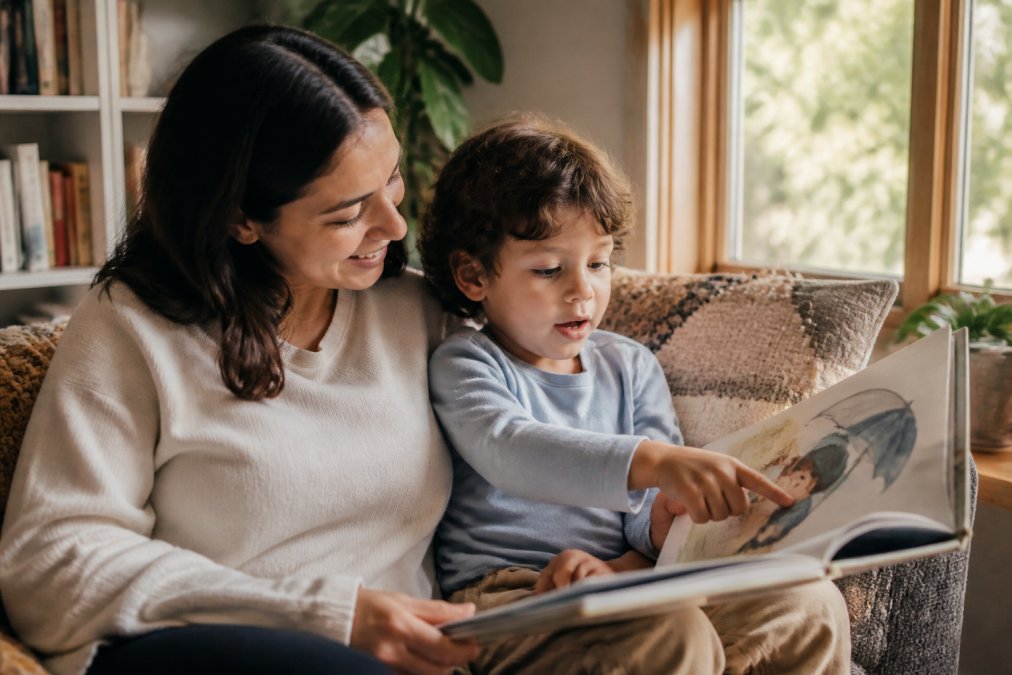
Look for stories where a character faces a problem and a friend responds with care, then ask: "How did that character feel?" "What would you have done?" "Has that ever happened to you?"
Reading aloud also builds emotional vocabulary. Children learn words like worried, proud, and lonely long before they can explain those feelings themselves.
How to Model Empathy for Children Every Day
Children copy what they see far more than what they hear. Modeling empathy for children means showing it in ordinary moments, not announcing it.
A few everyday moves:
- Apologize when you snap. "I was short with you. I'm sorry."
- Say feelings out loud. "I'm nervous about this call."
- Listen without fixing. Let your child finish before you solve anything.
- Notice others. "That driver looked rushed. I hope they're okay."
Modeling is not a performance, kids spot fake calm instantly. They learn more from watching you recover after a hard moment than from watching you stay perfect.
Quick Reference: Match the Moment to the Activity
| Situation | Try This | Time Needed |
|---|---|---|
| Sibling argument | Role swap: each retells the fight as the other person | 5 minutes |
| Bedtime | Read a story, then ask how a character felt | 10 minutes |
| Mealtime | One kind thing about someone at the table | 2 minutes |
| After your own mistake | Apologize out loud and name the feeling | 1 minute |
Frequently Asked Questions
At what age do kids learn empathy?
Children start showing early signs of empathy around age 2, when they notice someone crying and may offer a hug. By ages 4 to 7, most kids begin perspective-taking, understanding that others have feelings different from their own. Ages 8 to 10 bring more cognitive empathy, where children can imagine how a classmate feels after being left out. These are general developmental milestones, not deadlines. Some kids need more time and more modeling before empathy clicks.
What are simple daily activities to foster empathy in children?
Try a two-minute feelings check at dinner where each person names one emotion from their day. During read-alouds, pause and ask, "How do you think she feels right now?" When conflicts happen, use a script: "I see you're upset. What do you think your brother is feeling?" Rotate roles in pretend play so kids practice seeing a situation from another person's view. These small, repeated moments build emotional vocabulary and perspective-taking faster than one big lecture.
How do I handle a child who shows a lack of empathy?
First, rule out the obvious: hunger, exhaustion, or a bad day can look like coldness. If the pattern continues, skip the shame and get specific. Name the feeling you saw, describe its impact, and ask a question instead of issuing a verdict. For neurodivergent kids, verbal cues may not land the same way, so try visual cues or role-play. If empathy gaps persist alongside aggression or social struggles, talk with a pediatrician or school counselor.
Building empathy is slow work, and most parents feel behind at some point. Miso & Kili's Adventures makes it easier with award-winning children's books and the Co-Pilot Club, whose monthly missions turn kindness and perspective-taking into screen-free adventures. For families who want their kids to love reading and care about others, it is a natural fit. Join the Miso & Kili Co-Pilot Club and bring those missions home.