

How to Teach Problem Solving to Elementary Kids at Home
Table of Contents
- Steps to Teach Problem Solving at Home
- Problem-Solving Scenarios for Kids to Practice
- Problem-Solving Activities for Elementary Students
- Frequently Asked Questions
Last Updated: September 22, 2026
Steps to Teach Problem Solving at Home
When you teach problem solving to elementary kids at home, it works best when you guide, not rescue. Research from Harvard's Center on the Developing Child shows children build executive function through practice, not instruction. This guide from Miso & Kili's Adventures walks you through a simple six-step routine you can use today.

Problem solving is the ability to identify a challenge, think through options, and pick a path forward. For kids ages 4-10, it grows through repetition and gentle coaching.
Here is the sequence that works:
- Name the problem out loud. "Your tower keeps falling. That's the problem."
- Ask what they've tried. Let them talk first.
- Brainstorm together. Offer silly ideas alongside serious ones.
- Let them pick one. Even a wobbly choice builds ownership.
- Try it and watch. Stay quiet unless asked.
- Talk about what happened. "Did that work? What would you try next?"
Each step takes under a minute. The goal is a habit, not a perfect answer.
Problem-Solving Scenarios for Kids to Practice
Real-life moments teach faster than lectures. Use everyday friction as your classroom.
Try these problem-solving scenarios for kids:
- The missing shoe. "We leave in five minutes. What's your plan?"
- The broken toy. "The wheel came off. What could we try?"
- The friend conflict. "She took your crayon. What are your choices?"
- The stuck zipper. "It won't budge. What else could work?"
- The spilled drink. "What do we need first, towel or cup?"
Keep your tone curious, not frustrated. Kids read your face before your words.
Miso & Kili Activity Book Bundle — 3 →
For conflict, try: "I feel ___ when ___. Can we try ___?" This gives children words for big feelings and builds conflict resolution skills early.
Problem-Solving Activities for Elementary Students
Hands-on play beats worksheets for building thinking skills. Screen-free activities let kids test ideas, fail safely, and try again.
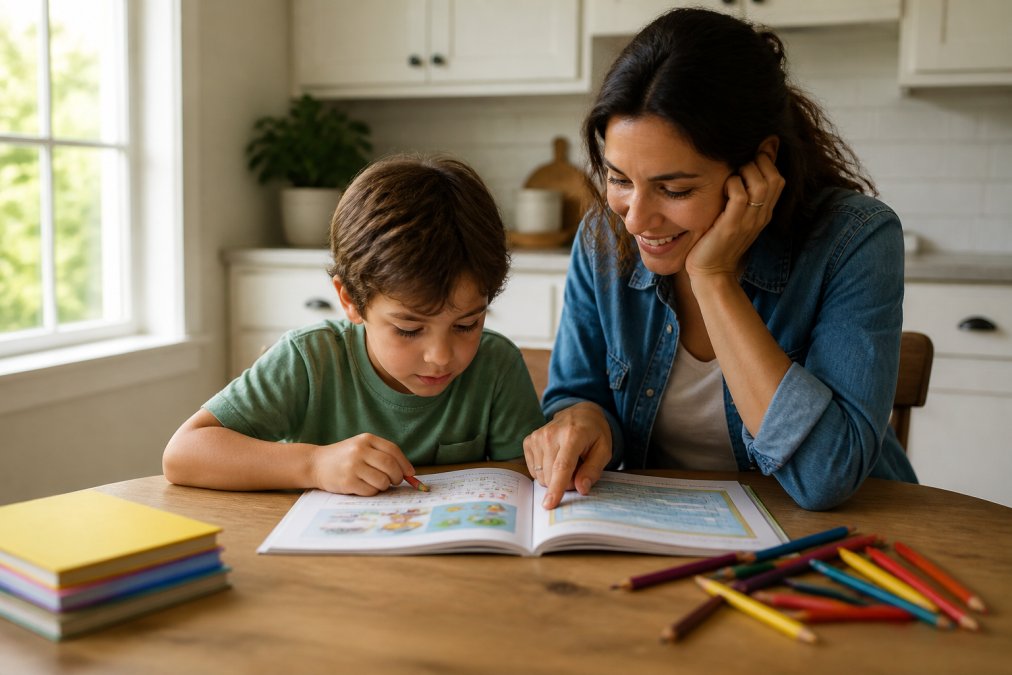
Strong problem-solving activities for elementary students include:
- Puzzle books. Mazes, logic grids, and matching games.
- Building challenges. "Make a bridge from these blocks."
- Cooking together. "We're out of eggs. What else works?"
- Board games. Turn-taking builds patience and planning.
- Story prompts. "What would you do if you were lost?"
Activity books are an easy win. The Miso & Kili Activity Book Bundle pairs puzzles with creative prompts across three adventures, giving kids hours of screen-free practice with problem-solving and imagination. It suits ages 4-8 and works well for quiet time or homeschool days.
Raising a confident thinker takes patience, and some days it feels easier to just hand over the answer. Miso & Kili's Adventures makes that practice fun with award-winning children's books and activity bundles built for screen-free discovery. The New Island Friend Activity Book Bundle pairs a signed storybook with puzzles and coloring pages, while the Co-Pilot Club delivers fresh monthly missions to keep young explorers thinking and creating. Turn everyday challenges into adventures your kids are proud to solve.

Frequently Asked Questions
How can I teach problem-solving skills to my kids at home?
Start by walking through the steps out loud so your child hears your thinking. Name the problem, brainstorm two or three ideas together, try one, and talk about what happened. Keep it short, five minutes is enough. Repeat this routine during everyday moments like a lost shoe or a squabble over a toy. Over time, your child starts running the steps on their own without your prompts.
What are some simple problem-solving scenarios for kids to try?
Use real, low-stakes situations. A puzzle piece that will not fit, two siblings who want the same marker, or a block tower that keeps falling. Ask 'What could you try?' instead of fixing it. For a bigger challenge, try a problem-solving scenario like planning a snack for a younger sibling or figuring out how to reach a book on a high shelf safely. Real scenarios stick better than hypothetical ones.
What problem-solving activities for elementary students work best at home?
Puzzles, mazes, and activity books that ask kids to solve something on the page work well because they are quiet, screen-free, and self-paced. The Miso & Kili Activity Book Bundle ($24.99) includes coloring pages, puzzles, and creative prompts across three adventures, which gives kids repeated practice with trial and error. Board games, scavenger hunts, and cooking together also build the same skills.