

Interactive Learning Activities for Homeschoolers
Table of Contents
- Why Interactive Learning Activities Matter for Homeschoolers
- Hands-On Homeschooling Activities That Build Real Skills
- Screen-Free Educational Activities for Kids That Engage Multiple Senses
- Kinesthetic Learning Activities for Students Who Learn by Doing
Last Updated: August 27, 2026
Why Interactive Learning Activities Matter for Homeschoolers
Interactive learning activities transform abstract concepts into tangible experiences children remember. When kids engage hands-on, their brains activate differently than with passive reading, they problem-solve in real time, make connections, and test hypotheses (the NIH).
Most homeschooling parents struggle to find activities that genuinely teach while keeping kids engaged. At Miso & Kili's Adventures, we've built our entire approach around this principle: learning should spark imagination, not replace it. Our award-winning books pair with hands-on activities that extend the story beyond the page.

Hands-On Homeschooling Activities That Build Real Skills
Hands-on homeschooling activities are where theory meets practice. A child reading about ecosystems learns facts. A child building and maintaining a terrarium learns responsibility, observation, and cause-and-effect.
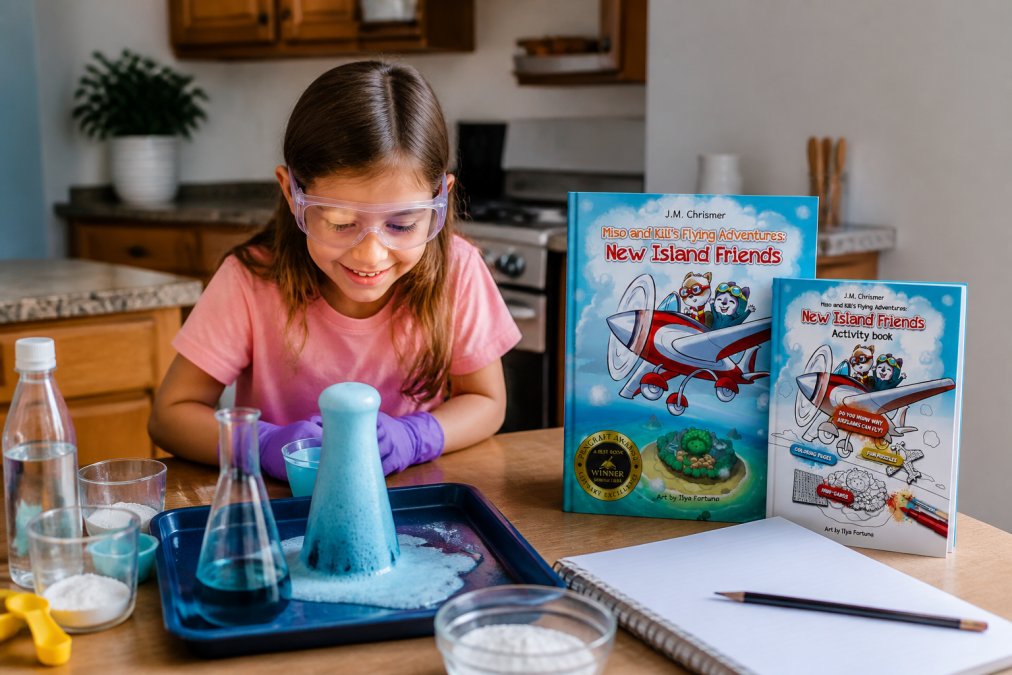
Project-based learning works because it mirrors how humans actually solve problems (peer-reviewed research). Proven hands-on activities include: Science Experiments (baking soda volcanoes, crystal gardens, water filtration), Cooking and Baking (teaching math, ratios, and sequencing), Building Challenges (developing problem-solving through design), Nature Journaling (building observation skills), and Art Projects Tied to Learning Goals (amplifying retention through creativity).
These activities work best when connected to something the child cares about. A child obsessed with cats will engage deeper with a big cats project than generic animal study.
Screen-Free Educational Activities for Kids That Engage Multiple Senses
Screen-free educational activities aren't about deprivation, they're about richness. When a child reads a story and acts it out, builds a set, and creates costumes, they engage visual, kinesthetic, auditory, and social senses simultaneously.
Research is clear: children retain more when multiple senses are involved (peer-reviewed research). The Miso & Kili Activity Book Bundle, 3 Adventures in One pairs story-based learning with hands-on extension activities, kids read the story, then color, solve puzzles, and create alongside characters while building problem-solving skills.

Screen-free activities that work include: Literacy Activities (read-alouds, acting out stories, puppet shows), Social Interaction and Games (teaching negotiation and communication), Art and Creative Expression, and Structured Play with Purpose (building strategy and spatial reasoning).
Kinesthetic Learning Activities for Students Who Learn by Doing
Kinesthetic learners think through their bodies. They need to move, touch, manipulate, and experience. A kinesthetic learner sitting still while reading about fractions will disengage. That same learner building with fraction blocks or measuring ingredients will suddenly understand. indoor activities for preschoolers.
Join the Miso & Kili Co-Pilot Club! →
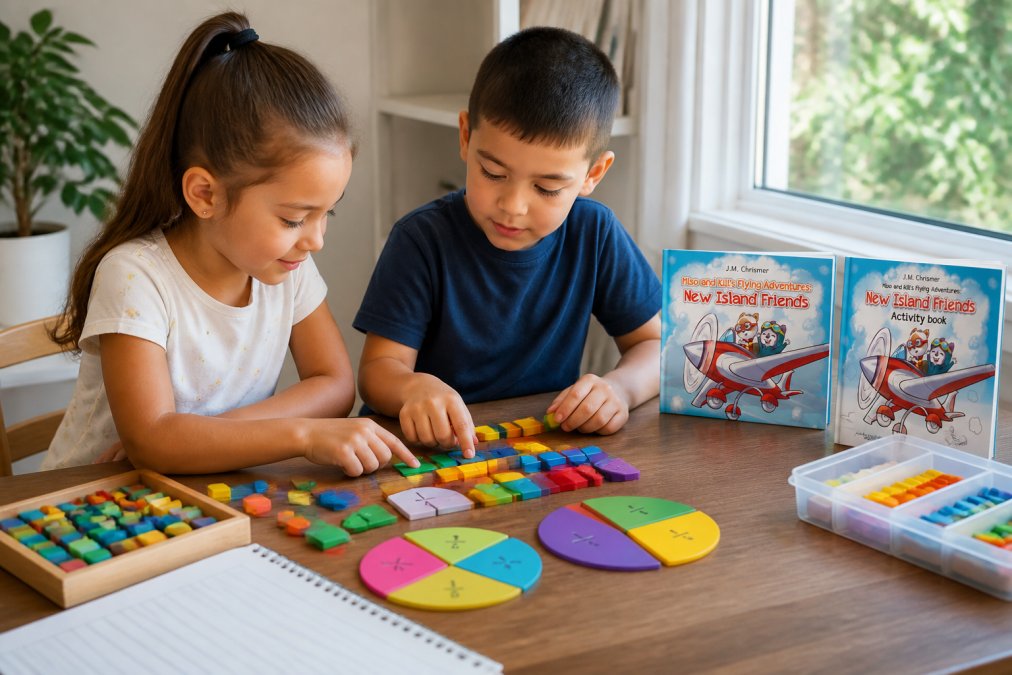
Math manipulatives are the classic example. Instead of abstract symbols on a page, kids handle physical objects and see that three groups of two equals six. Effective kinesthetic activities include: Math Manipulatives (blocks, counters, fraction tiles), Movement-Based Learning (acting out historical events), Hands-On Experiments (mixing, measuring, building, observing), and Cooking as Curriculum (wrapping academic skills in sensory experience).
Bringing Interactive Learning Activities Into Your Homeschool Routine
The best interactive learning activities are the ones you actually use, simple, repeatable ones that fit into real life. Start small and pick one type of activity to do consistently. Budget-friendly activities are often most effective because they remove pressure to make something expensive "worth it."
When interactive activities connect to what you're already studying, they reinforce rather than distract. The Miso & Kili's Flying Adventures Complete Series Softcover Set provides story-based learning that naturally extends into hands-on activity, creating a complete interactive learning experience.

Interactive learning activities aren't optional extras in homeschooling, they're the core. When children engage through their senses, hands, and curiosity, they remember more, understand deeper, and develop confidence that transfers to every subject.
Join the Miso & Kili Co-Pilot Club and unlock monthly missions designed to spark adventure and build skills through interactive, screen-free learning activities your children will actually want to do.
Frequently Asked Questions
What are some fun and engaging interactive learning activities for homeschoolers?
Interactive learning activities combine hands-on exploration with structured learning. STEM experiments, art projects, cooking lessons, nature scavenger hunts, and book-based adventures all work well. The key is choosing activities that match your child's age and interests. For younger children (ages 4-6), sensory play and simple crafts build foundational skills. Older children (ages 7-10) thrive with project-based learning, problem-solving challenges, and collaborative activities. Pairing stories like Miso & Kili's adventures with activity books deepens engagement and encourages critical thinking.
How do I incorporate hands-on homeschooling activities into my curriculum?
Start by identifying your learning goals, then design activities that address them experientially. For example, if teaching about geography, combine reading with outdoor exploration or map-making projects. Use hands-on homeschooling activities as curriculum supplements rather than replacements. Activity books paired with adventure stories create natural integration: read the story, then complete puzzles and creative exercises that reinforce themes. Monthly missions through programs like the Co-Pilot Club provide structured guidance. Budget 30-60 minutes per activity, allowing time for exploration and reflection without rushing the learning process.
Why are screen-free educational activities for kids so important?
Screen-free educational activities for kids promote deeper cognitive engagement, better retention, and stronger social-emotional development. When children work with physical materials, solve problems hands-on, and create with their own hands, they build confidence and critical thinking skills that screens cannot develop. Kinesthetic learning, using movement and touch, activates multiple brain regions simultaneously, creating stronger neural pathways. Screen-free time also encourages imagination, reduces overstimulation, and allows children to develop patience and focus. Activities combining reading, art, and exploration create lasting memories while building academic skills naturally.
This article was written using GrandRanker