

Screen-Free Educational Activities for Kids
Table of Contents
- Screen-Free Educational Activities That Build Real Skills
- Benefits of Screen-Free Time for Child Development
- Educational Games for Kids at Home
- How to Reduce Screen Time for Children
Last Updated: August 15, 2026
Screen-Free Educational Activities That Build Real Skills
Screen-free educational activities for kids spark creativity, build confidence, and strengthen critical thinking in ways screens cannot. The best activities combine unstructured play with gentle structure, open-ended enough to follow the child's curiosity but focused enough to build real skills.
| Activity Type | Time Required | Materials | Best For | Skill Focus |
|---|---|---|---|---|
| Creative arts & crafts | 20-45 minutes | Markers, paper, recyclables | Fine motor skills, creative expression | Artistic development |
| Nature exploration | 30-60 minutes | Outdoor space, journal | Sensory play, observation | Scientific thinking |
| Imaginative play | 30-90 minutes | Props, costumes, household items | Social-emotional learning | Problem-solving |
| Educational games | 15-30 minutes | Puzzles, cards, board games | Critical thinking | Cognitive development |
| Cooking together | 45-90 minutes | Kitchen ingredients, simple recipes | Practical skills, measurement | Math, following directions |
| Reading & storytelling | 20-45 minutes | Books, quiet space | Literacy development | Language skills |
1. Coloring and Activity Books with Adventure Themes
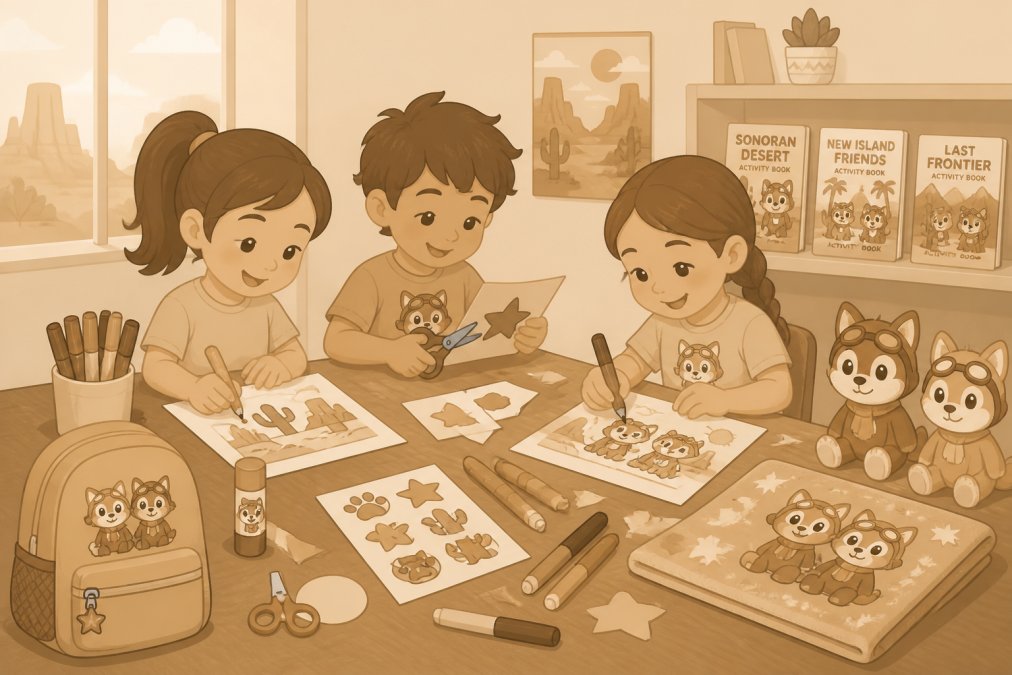
Coloring paired with storytelling builds narrative thinking and confidence. The Miso & Kili Activity Book Bundle includes three complete adventure stories with coloring pages, puzzles, and activities that encourage problem-solving. Kids follow two adventurous pilot cats through an island, Alaska, and the Sonoran Desert while working through mazes, matching games, and creative prompts. At $24.99, this bundle delivers hours of screen-free engagement while teaching geography, observation skills, and creative thinking.

2. Nature Walks and Outdoor Exploration
Outdoor exploration builds gross motor skills and teaches careful observation. Nature walks don't require special equipment, a walk around the block with a notebook becomes a scavenger hunt when you ask your child to sketch or list everything they notice. For younger children (ages 4-6), keep walks short and discovery-focused. For older kids (7-10), introduce simple nature journaling to develop both artistic and scientific thinking.
3. DIY Crafts Using Household Materials
Recycled cardboard, paper bags, old buttons, and newspaper become building materials when children approach them with imagination. Set out a collection of materials and let children build without a predetermined outcome. Open-ended projects build confidence because there's no "wrong" way to do it, while developing fine motor skills, spatial reasoning, and critical thinking.
4. Educational Games and Puzzles
Educational games teach turn-taking, patience, rule-following, and strategic thinking. Puzzles develop visual-spatial skills and persistence, a child who completes a 100-piece puzzle has practiced problem-solving, fine motor control, and sustained focus. Board games and card games add social-emotional learning by teaching children to handle winning and losing and think ahead.
5. Reading Aloud and Storytelling
Reading aloud builds vocabulary, imagination, and emotional intelligence. Storytelling without books, where you make up stories together or your child narrates their own tales, develops narrative thinking and confidence in self-expression. The Miso & Kili's Flying Adventures series engages children ages 6-9 with character-driven stories about adventure, friendship, and problem-solving.

6. Cooking and Baking Together
Cooking is applied math, chemistry, and life skills wrapped into one activity. When children measure ingredients, follow sequences, and adjust based on results, they're learning fractions, cause-and-effect thinking, and patience. A child who successfully bakes cookies has proof of their competence. Start with simple recipes and let the child lead as much as possible.
7. Imaginative and Pretend Play
Imaginative play helps children process emotions, develop social skills, and build confidence. Props help, a cardboard box becomes a spaceship, a blanket becomes a fort. Character plushies like Miso the Pilot or Kili the Mechanic give children anchors for their imagination. Collaborative pretend play with siblings or parents teaches negotiation, compromise, and social-emotional skills.
8. Benefits of Screen-Free Time for Child Development
Reducing screen time correlates with improvements in sleep, attention span, and emotional regulation. When children engage in hands-on activities, they build neural pathways associated with problem-solving, motor control, and creative thinking. Screen-free time also protects social-emotional development, children who spend more time in unstructured play develop better conflict-resolution skills, empathy, and self-regulation.
Join the Miso & Kili Co-Pilot Club! →
9. Educational Games for Kids at Home
Educational games at home include card games, dice games, and strategy games that build specific skills. Games involving counting, matching, or pattern recognition develop numeracy. Games requiring planning and prediction develop executive function. Games feel like play, not learning, making them ideal for neurodivergent children who benefit from clear rules, predictable outcomes, and immediate feedback.
10. How to Reduce Screen Time for Children
Reducing screen time works best when it's gradual and when you replace screens with compelling alternatives. Start by identifying which screens are most entrenched, then pick one category and replace it with a specific alternative. The transition takes 2-3 weeks for children to adjust.
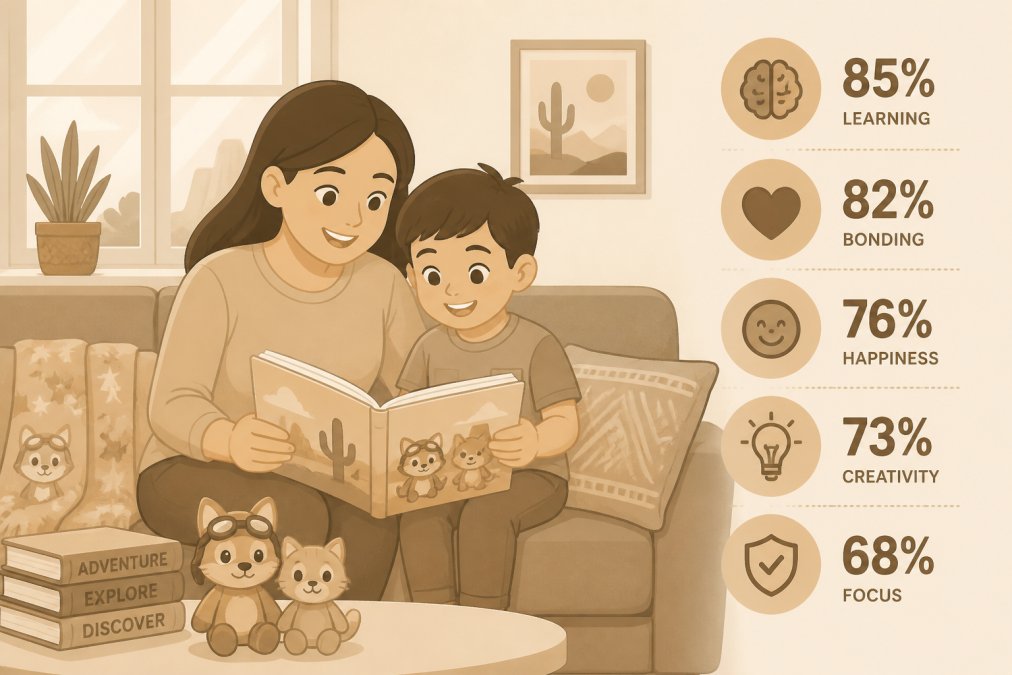
Involve children in planning by asking which activities sound fun and letting them choose between options. Set clear, consistent boundaries like "Screens are off-limits until after homework and dinner." Model the behavior by putting away your own device during screen-free time. Many families find that shared offline time becomes their favorite part of the day once they adjust.
Reducing screen time and building confidence through offline learning doesn't require expensive programs or complicated planning. It requires consistency, compelling alternatives, and patience through the adjustment period. Miso & Kili's Adventures provides exactly what families need: award-winning stories and activity books that children actually want to engage with, paired with a monthly Co-Pilot Club that keeps the adventure going with new missions and challenges. Start with the Miso & Kili Activity Book Bundle, the bridge between screen time and genuine engagement that most families are searching for. Join the Miso & Kili Co-Pilot Club and transform screen-free time from a struggle into your family's favorite part of the day.
Frequently Asked Questions
What are the benefits of screen-free activities for child development?
Screen-free activities strengthen critical thinking, problem-solving, and creativity. Unstructured play builds fine and gross motor skills, while hands-on learning improves cognitive development. Reading and imaginative play enhance social-emotional development and boost confidence. Kids develop independence and resilience when they engage in open-ended activities without digital distractions. These activities also improve focus, sleep quality, and overall well-being.
How do I keep my child entertained without screens?
Offer a mix of activities: creative arts and crafts, outdoor exploration, building projects, cooking together, reading, imaginative play, and educational games. Rotate activities to maintain interest. Start with activities your child naturally enjoys, if they love animals, try nature walks or animal-themed books. Create a dedicated space for creative play. Set a consistent routine that includes screen-free time. The key is variety and matching activities to your child's interests and developmental stage.
What are some educational activities for kids at home?
Educational games for kids at home include puzzles, building blocks, science experiments, cooking projects, reading together, writing and storytelling, board games, and educational activity books. Activity books like the Miso & Kili Activity Book Bundle ($24.99) combine coloring, puzzles, and problem-solving in one engaging package. Nature observation journals, DIY craft projects, and pretend play also build learning skills. Choose activities that match your child's age and interests to maximize engagement.
How much screen time is recommended for children?
The American Academy of Pediatrics recommends limiting screen time for children ages 6 and older to consistent, high-quality programming while ensuring it doesn't interfere with sleep, physical activity, and other healthy behaviors. For children under 6, they recommend minimal screen exposure. Screen-free educational activities provide a healthy balance and support overall development without replacing the learning benefits of hands-on, offline engagement.
Can screen-free activities actually teach my child real skills?
Absolutely. Screen-free activities build literacy, numeracy, problem-solving, creativity, and social-emotional skills more effectively than passive screen time. Hands-on learning strengthens neural pathways through direct experience. Reading develops language and imagination. Puzzles and games teach logic and strategy. Creative projects build confidence and self-expression. Outdoor play develops physical coordination and environmental awareness. Award-winning resources like Miso & Kili's books pair adventure stories with activity pages to deepen learning through active engagement.
This article was written using GrandRanker