

How to Encourage Reading Habits in Children
Table of Contents
- Create a Dedicated Reading Space
- How to Make Reading Fun for Kids
- Build Literacy Activities for Home Into Your Daily Routine
- Use Creative Writing Prompts for Kids to Deepen Engagement
Last Updated: August 24, 2026
Create a Dedicated Reading Space
A dedicated reading space signals that reading matters in your home. Low shelves let children see and grab books independently. Comfortable seating, whether bean bags or cushions, removes friction. Natural or soft lighting matters; harsh overhead lights make reading feel like work. When kids can physically access books without asking, they're more likely to pick one up out of curiosity.
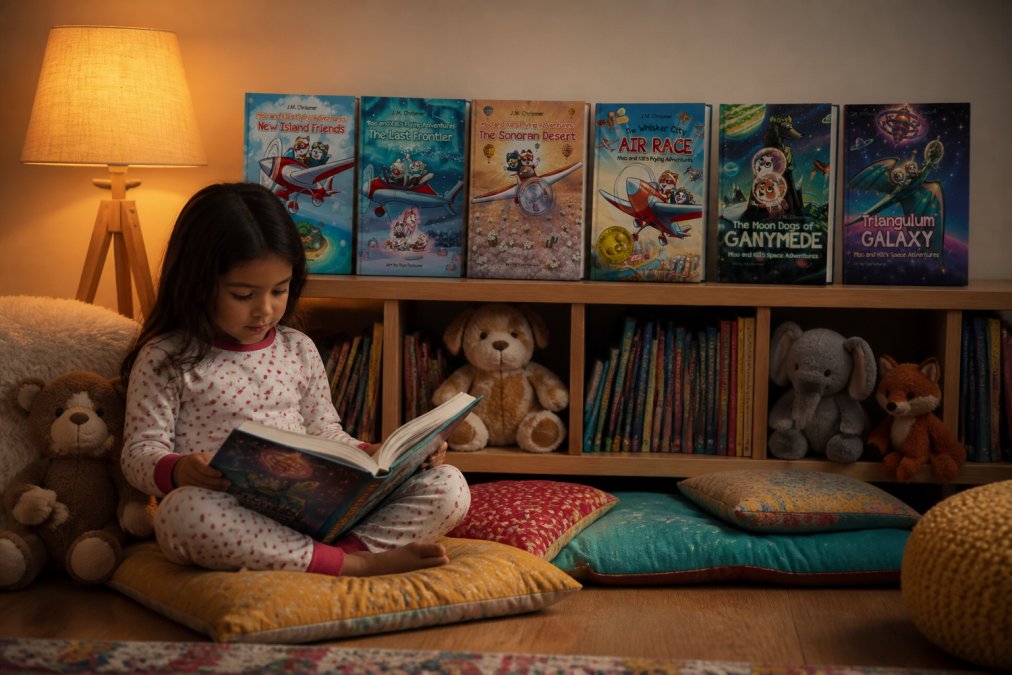
Research shows that literacy environments significantly impact childhood reading development. A space designed for reading becomes part of your family's literacy environment, making it easier for children to develop consistent reading habits naturally.
How to Make Reading Fun for Kids
Reading stops being fun when it feels like a chore. Start with books that match your child's actual interests. A child obsessed with cats will devour a cat story; one fascinated by airplanes will race through aviation adventures. When content connects to what they already love, reading becomes intrinsic motivation, they're reading because they want to. creating a reading nook.
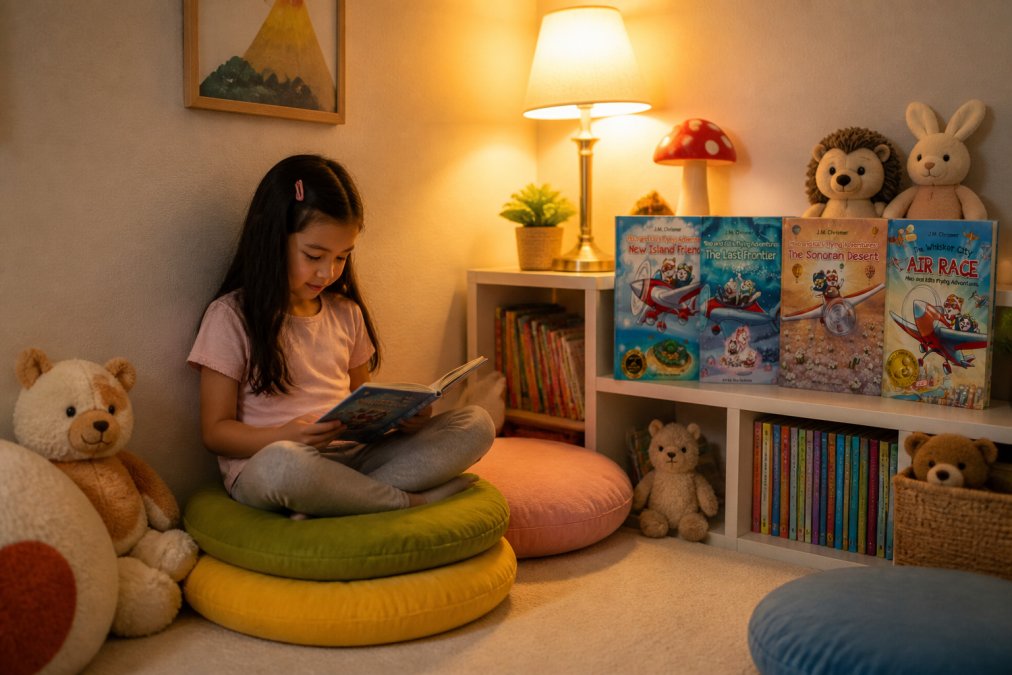
Read aloud together, even if your child can read independently. Shared reading creates positive associations with books and models enthusiasm. Make reading social by talking about what you're reading. Ask questions: "What do you think happens next?" "Why did the character do that?" These conversations deepen comprehension and show your child that books are worth discussing.
Build Literacy Activities for Home Into Your Daily Routine
A daily routine anchors reading habits. Consistency matters more than duration; fifteen minutes daily builds stronger habits than an hour once a week (peer-reviewed research). Pick a time that works for your family, many read before bed or after breakfast. Over weeks, your child's brain will anticipate reading time, and resistance drops.
Weave literacy into everyday moments beyond formal reading time. Read signs while you're out. Point out words on menus, packages, and storefronts. Play word games. These moments reinforce that reading isn't confined to books. Consider using evidence-based literacy frameworks for home learning to structure activities. The Miso & Kili Co-Pilot Club offers monthly missions that turn reading into adventure, making daily literacy routines feel less like obligation and more like exploration.
Use Creative Writing Prompts for Kids to Deepen Engagement
Creative writing prompts bridge reading and writing, deepening your child's connection to stories. Start with prompts tied to books you've read together: "What happens to the character after the story ends?" "Write a scene from the villain's perspective." Simple starters work well: "If I had a superpower, I would..." The goal is getting words on paper, not producing polished writing.
Join the Miso & Kili Co-Pilot Club! →
Keep a writing log where your child records their responses. Over time, this becomes a record of growing confidence and skill. Reading their own writing reinforces that stories matter because they created them. The Miso & Kili's Flying Adventures: Complete Series Softcover Set (Books 1-6) pairs beautifully with creative prompts at $74.95, offering six books full of imaginative scenarios that kids naturally want to explore further through writing.
Building strong reading habits takes patience and consistency, but the payoff lasts a lifetime. When reading becomes part of your family's daily rhythm, woven into routines, connected to joy, and supported by a welcoming environment, children develop a genuine love of books.
Join the Miso & Kili Co-Pilot Club to turn reading into monthly adventures. Our missions transform literacy from a solitary activity into an interactive journey, giving your child reasons to keep reading and exploring beyond the pages.
Frequently Asked Questions
How much time should a child spend reading daily?
Most educators recommend 20-30 minutes of daily reading for elementary-aged children, though even 15 minutes consistently builds strong reading habits. The key is consistency over duration. Starting with shorter sessions and gradually increasing time helps children develop reading stamina without feeling overwhelmed. Quality matters more than quantity, engaged reading for 15 minutes beats distracted reading for an hour.
What should I do if my child resists reading?
Reading resistance often stems from pressure, difficulty level mismatch, or lack of interest in available books. Start by removing expectations and letting your child choose books freely. Read aloud together without requiring them to follow along. Pair reading with enjoyable activities like snacks or cozy settings. For neurodivergent children, try graphic novels, audiobooks, or shorter texts. Patience and removing judgment are essential, forcing reading creates negative associations that last years.
How do creative writing prompts for kids help encourage reading habits?
Creative writing prompts connect reading to self-expression, making literacy feel purposeful rather than passive. When children write their own stories inspired by characters they've read about, they develop deeper comprehension and intrinsic motivation. Prompts like 'What happens next in the story?' or 'Write about your own adventure' bridge the gap between consuming stories and creating them, reinforcing that reading is a skill they can use to tell their own tales.
This article was written using GrandRanker