

How to Foster Imagination in Kids: 4 Proven Strategies
Table of Contents
- Why Fostering Imagination Matters for Child Development
- Creative Storytelling Activities for Kids That Build Confidence
- Benefits of Imaginative Play for Toddlers and Older Children
- How to Encourage Pretend Play Through Open-Ended Questions and Props
Last Updated: August 21, 2026
Why Fostering Imagination Matters for Child Development
Imagination is the foundation of creative thinking and cognitive development in children. When kids engage in imaginative play, they're building neural pathways that support problem-solving, emotional intelligence, and self-expression. Children who regularly engage in imaginative activities develop stronger confidence in their own ideas and learn that their thoughts matter.
At Miso & Kili's Adventures, we understand that imagination is how children make sense of the world. Through screen-free storytelling and adventure-based activities, we help families build this critical foundation.
Creative Storytelling Activities for Kids That Build Confidence
Storytelling is one of the most direct ways to spark imaginative thinking in children. Start with simple prompts: "What if the cat could talk?" or "Imagine you found a mysterious door in your backyard. Where does it lead?" These open-ended questions invite children to build scenarios without predetermined endings.
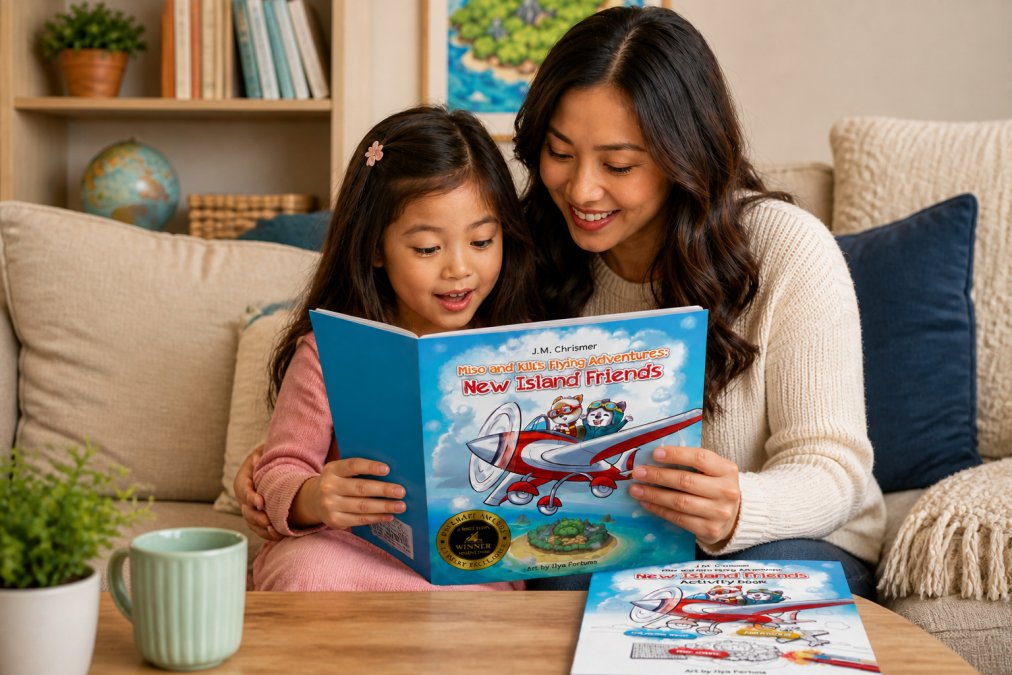
Collaborative storytelling works particularly well. Take turns adding sentences to a story, you start with one sentence, your child adds the next, and keep building. This teaches children that their ideas matter and belong in the narrative. classic bedtime stories.
The American Academy of Pediatrics emphasizes that interactive media experiences, including shared storytelling, support healthy child development better than passive consumption.
Benefits of Imaginative Play for Toddlers and Older Children
Imagination is how children make sense of the world. For toddlers, pretend play helps them understand cause and effect and process emotions safely. Older children use imaginative play to explore identity, test social scenarios, and develop problem-solving strategies.
Research consistently shows that children who engage in regular imaginative play demonstrate stronger divergent thinking, the ability to generate multiple solutions to open-ended problems (peer-reviewed research). This skill directly supports academic success, particularly in subjects requiring innovation and abstract reasoning.
Screen-free play deserves special mention. When children create their own entertainment using props and storytelling, they develop stronger self-directed imagination than when consuming pre-made narratives.
How to Encourage Pretend Play Through Open-Ended Questions and Props
The most effective way to foster imagination is removing barriers and adding curiosity-sparking prompts. Open-ended questions are your primary tool. Instead of asking "Did you like that story?" try "What do you think happened next?" or "If you were the character, what would you do differently?"
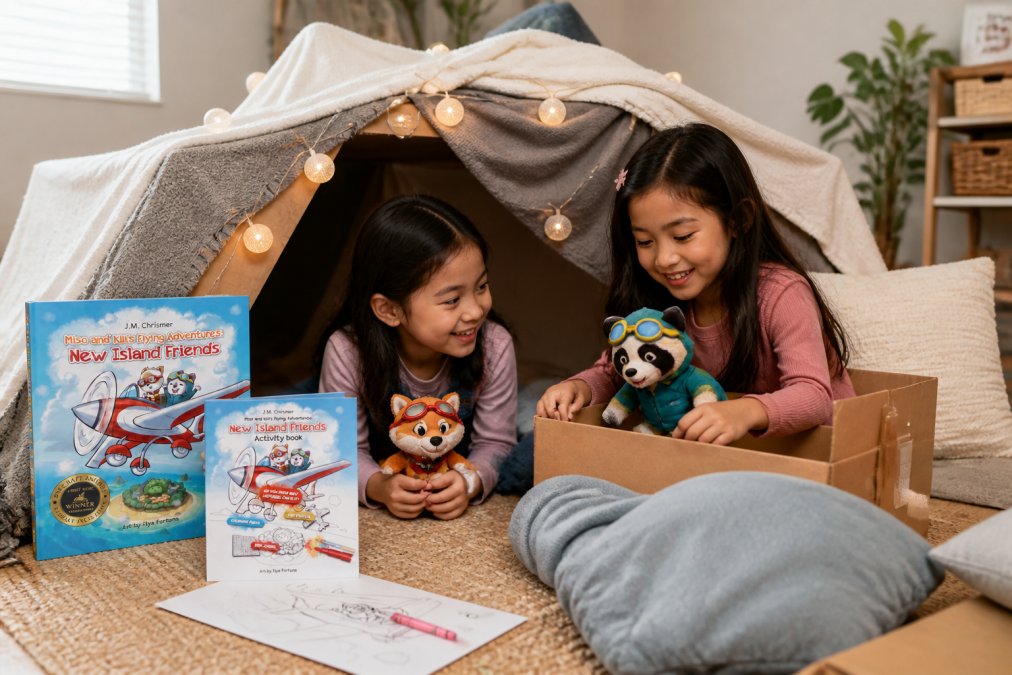
Props amplify imaginative play dramatically. Everyday objects often work better than toys designed for a single purpose. A cardboard box becomes a spaceship, castle, or shop. Scarves become capes, ropes, or rivers. This freedom forces children to generate their own ideas, strengthening creative thinking and building confidence.
Common mistakes parents make include over-directing play and providing toys so specific that only one type of play is possible. Instead, offer loose materials, ask questions that invite exploration, and step back to observe. The Child Mind Institute notes that when adults participate in pretend play, they should follow the child's lead rather than imposing their own narrative.
Join the Miso & Kili Co-Pilot Club! →
For families seeking structured support, Miso & Kili's Adventures offers the New Island Friend Activity Book Bundle and monthly Co-Pilot Club missions that combine storytelling with interactive challenges while keeping creative thinking centered on your child's ideas.

Fostering imagination in kids isn't about expensive toys or elaborate setups. It's about creating space for wondering, asking questions that invite exploration, and trusting that children naturally gravitate toward creative thinking when given the chance.
Ready to spark more adventures? Join the Miso & Kili Co-Pilot Club and receive monthly missions designed to inspire imaginative thinking through screen-free storytelling and interactive challenges that build confidence alongside creativity.
=== FAQ ANSWERS (audit these too, same rules) ===
[1] Q: How can I help my child develop their imagination? A: Start by asking open-ended questions that encourage divergent thinking, such as 'What would happen if?' or 'How else could we solve this?' Provide unstructured play time with props like blankets, boxes, and household items. Read stories together and discuss characters' motivations. Model imaginative behavior yourself by playing pretend, exploring outdoors, and showing curiosity about the world. Limit screen time to create space for creative thinking and role-playing.
[2] Q: What are the benefits of imaginative play for child development? A: Imaginative play strengthens cognitive development, critical thinking, and problem-solving skills. It builds social-emotional learning by allowing children to explore different perspectives and emotions through role-playing. Pretend play also fosters self-expression, boosts confidence, and nurtures curiosity. Research shows that children who engage in unstructured, imaginative play develop stronger creativity and resilience. It's one of the most effective ways to inspire a lifelong love of learning.
[3] Q: At what age can kids start imaginative play? A: Children begin pretend play around age 2-3 with simple role-playing like pretending to cook or care for dolls. By ages 4-6, imaginative play becomes more complex with elaborate scenarios and storytelling. Older children (7-10) engage in sophisticated role-playing, collaborative games, and creative problem-solving. However, every child develops at their own pace. You can nurture imagination at any age by providing props, asking open-ended questions, and modeling imaginative behavior yourself.
Frequently Asked Questions
How can I help my child develop their imagination?
Start by asking open-ended questions that encourage divergent thinking, such as 'What would happen if?' or 'How else could we solve this?' Provide unstructured play time with props like blankets, boxes, and household items. Read stories together and discuss characters' motivations. Model imaginative behavior yourself by playing pretend, exploring outdoors, and showing curiosity about the world. Limit screen time to create space for creative thinking and role-playing.
What are the benefits of imaginative play for child development?
Imaginative play strengthens cognitive development, critical thinking, and problem-solving skills. It builds social-emotional learning by allowing children to explore different perspectives and emotions through role-playing. Pretend play also fosters self-expression, boosts confidence, and nurtures curiosity. Research shows that children who engage in unstructured, imaginative play develop stronger creativity and resilience. It's one of the most effective ways to inspire a lifelong love of learning.
At what age can kids start imaginative play?
Children begin pretend play around age 2-3 with simple role-playing like pretending to cook or care for dolls. By ages 4-6, imaginative play becomes more complex with elaborate scenarios and storytelling. Older children (7-10) engage in sophisticated role-playing, collaborative games, and creative problem-solving. However, every child develops at their own pace. You can nurture imagination at any age by providing props, asking open-ended questions, and modeling imaginative behavior yourself.
This article was written using GrandRanker