

Interactive Learning for Homeschooled Children
Table of Contents
- Why Interactive Learning Builds Homeschooling Confidence
- Screen-Free Educational Activities That Keep Kids Engaged
- Building a Hands-On Homeschool Curriculum with Activity Books
- Frequently Asked Questions
Last Updated: September 11, 2026
Why Interactive Learning Builds Homeschooling Confidence
Interactive learning for homeschooled children turns a passive recipient into an active participant. When a child manipulates, builds, solves, or narrates, the brain encodes the lesson through multiple pathways, so hands-on homeschool curriculum materials produce stronger retention than worksheets alone (PubMed).
Confidence arrives when a child stops asking "is this right?" and starts asking "what happens if I try this?" Interactive learning is any approach where the child actively responds, chooses, builds, or problem-solves rather than only listening or copying.
A common mistake is treating interactivity as a reward for finishing "real" work. Flip that order: start with the hands-on task, then let reading or writing follow.
Screen-Free Educational Activities That Keep Kids Engaged
Screen-free educational activities succeed when they demand a physical response. A child who has to move, build, sort, or perform cannot drift off the way they can in front of a video (the CDC).
The most reliable screen-free educational activities share three traits: a clear goal, more than one right answer, and something the child can show someone. Try these:
- Story mapping: Read a chapter, then have the child draw the map of where the characters went.
- Kitchen measurement: Doubling a recipe teaches fractions faster than a worksheet (peer-reviewed research).
- Build-a-scene: Use blocks or clay to recreate a scene from a book, then explain the choices.
That last one is where a story-driven activity book earns its place: when a child colors a character, solves a puzzle about that character's route, and retells the chapter, reading and doing reinforce each other.

Building a Hands-On Homeschool Curriculum with Activity Books
A hands-on homeschool curriculum puts physical doing at the center of each subject, with reading and writing as supporting tools. Activity books fit because they combine a narrative thread with puzzles, coloring, and problem-solving on the same page.
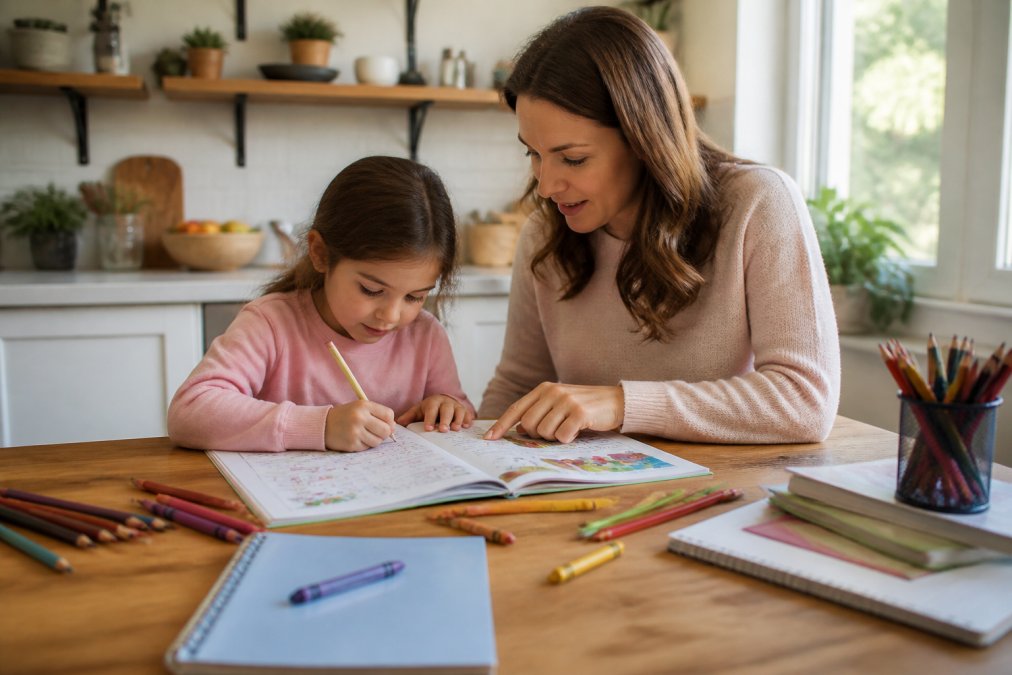
The structure is simple: pick a spine, one book or story that runs across several weeks, then attach one hands-on task per session. A single adventure story can carry geography, vocabulary, sequencing, and art for a month.
This is where the Miso & Kili Activity Book Bundle, 3 Adventures in One! does real curriculum work: one purchase covers three distinct settings, so you can rotate the spine every few weeks. Each book pairs a story with coloring, puzzles, and comprehension activities.
To test the format first, the New Island Friends Activity Book (digital download) is a printable PDF, so you can reprint favorite pages as often as a child revisits them. The same is true of The Last Frontier Activity Book (digital download) and The Sonoran Desert Activity Book (digital download). Reprinting matters: repetition is how mastery-based progression happens.


To keep the structure going after the book ends, the Co-Pilot Club sends monthly missions that extend the same characters into new challenges, solving the hardest part of a hands-on curriculum: sustaining it past week three.
Frequently Asked Questions
What is the best interactive homeschool curriculum?
The best interactive homeschool curriculum for children aged 4-10 combines screen-free educational activities with hands-on materials. Activity books that pair puzzles, coloring, and problem-solving with story-driven characters keep kids engaged without screens. Miso & Kili's Activity Book Bundle ($24.99) offers three adventures in one, giving children variety while reinforcing reading and critical thinking. Look for materials that align with your child's interests and allow them to work at their own pace.
Can you give me an example of interactive learning?
A strong example of interactive learning is pairing a storybook with a companion activity book. After reading about Miso and Kili's journey to a mysterious island, children can work through related puzzles, coloring pages, and creative prompts in the New Island Friend Activity Book Bundle ($24.99). This approach reinforces comprehension, builds fine motor skills, and keeps children excited to continue learning independently.
How can I make homeschooling more engaging for my child?
Make homeschooling more engaging by tying lessons to stories your child already loves. When children follow characters through adventures, they stay invested in the outcome. Add hands-on components like printable activity pages, which let kids color, solve puzzles, and create. The Last Frontier Activity Book digital download ($4.99) offers 44 printable pages you can reprint as often as needed, making it easy to build a flexible, engaging routine.
The real challenge in homeschooling is not finding enough material. It is keeping a child curious enough to keep showing up. Miso & Kili's Adventures builds for that specific problem, with award-winning children's books, screen-free activity books, and monthly Co-Pilot Club missions that turn reading into something a child does rather than something a child receives. Get started with Miso & Kili's Adventures and give your young explorer a curriculum they ask for.