

What Are the Risks of Too Much Screen Time for Kids?
Table of Contents
- How Much Screen Time Is Too Much? Screen Time Recommendations for Children
- The Real Risks of Too Much Screen Time: Sleep, Eyes, Mood, and Bodies
- How to Reduce Screen Time for Kids Without the Meltdowns
- Screen-Free Educational Activities for Kids That Actually Hold Attention
- Frequently Asked Questions
Last Updated: September 19, 2026
How Much Screen Time Is Too Much? Screen Time Recommendations for Children
What are the risks of too much screen time? They show up first in sleep, then in mood, posture, and attention. This guide from Miso & Kili's Adventures breaks down the research and what parents can do.
The American Academy of Pediatrics and the World Health Organization both publish screen time recommendations for children. Ages 2 to 5: no more than one hour of high-quality programming daily, ideally co-viewed. Ages 6 and older: consistent limits that protect sleep, physical activity, and offline play.
| Age Group | Daily Recreational Screen Limit | What Matters Most |
|---|---|---|
| Under 2 | Avoid solo screen use except video calls | Face-to-face interaction |
| Ages 2-5 | About 1 hour of quality content | Co-viewing with a parent |
| Ages 6-10 | Consistent limits, no fixed number | Sleep and activity protected first |
The World Health Organization's guidance on physical activity, sedentary behaviour and sleep for children under 5 is one of the clearest frameworks available, and it's worth reading directly: WHO guidelines on physical activity, sedentary behaviour and sleep for children under 5. Notice what it protects: sleep, movement, and interaction. Screen time is the variable, not the villain.
The Real Risks of Too Much Screen Time: Sleep, Eyes, Mood, and Bodies
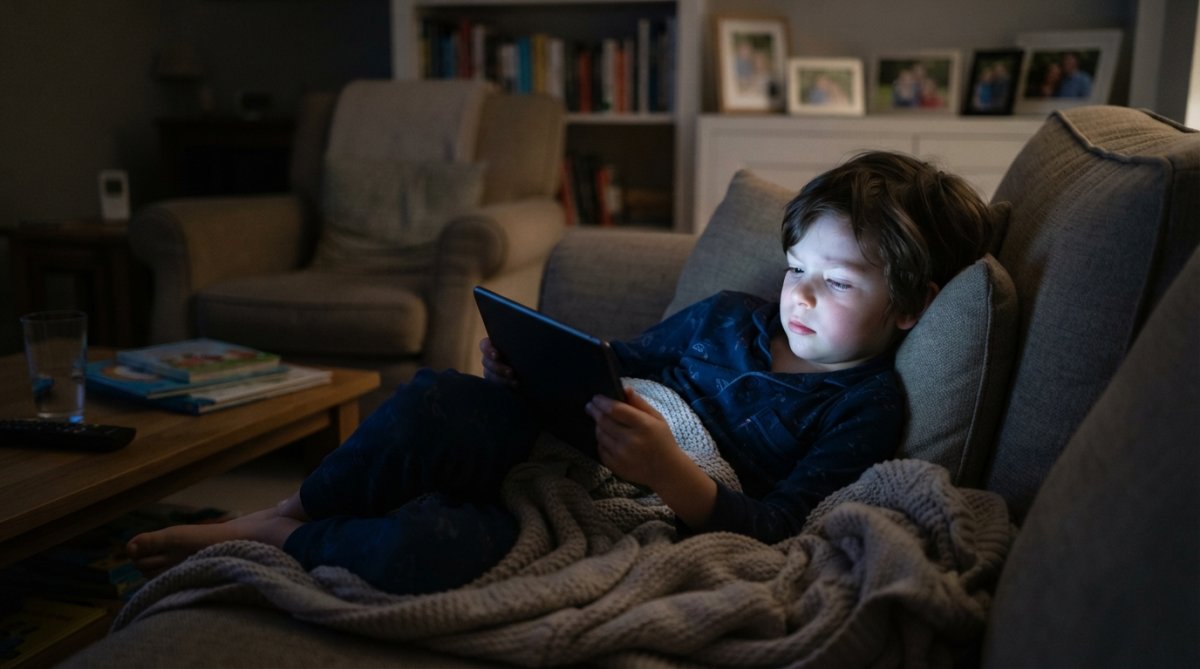
The most consistent finding across pediatric research is that screens push sleep later: blue light suppresses melatonin, and interactive content keeps the brain alert past bedtime. Short sleep is linked to irritability, poor emotional regulation, and lower impulse control.
Digital eye strain is the second cluster: blurry vision, dry eyes, headaches. The 20-20-20 rule helps, every 20 minutes, look 20 feet away for 20 seconds. Poor posture causes neck, shoulder, and back discomfort. The mental health picture is more nuanced: passive scrolling is linked to anxiety, depression symptoms, and shortened attention span, while a calm, co-viewed documentary does not carry the same load. Persistent exposure to high-energy light sources exacerbates this cumulative impact on eye health, which explains why your eyes feel tired after screen time.
How to Reduce Screen Time for Kids Without the Meltdowns
Reducing screen time fails when it feels like punishment; it works when something better takes its place. Audit usage for three days, protect sleep first (no screens 60 minutes before bed, no devices in bedrooms overnight), build screen-free zones at mealtimes and in the car, and replace rather than remove. A basket of activity books, puzzles, and coloring supplies on the table does more work than any rule.
New Island Friend Activity Book Bundle →
This is where Miso & Kili's Adventures fits naturally. The New Island Friend Activity Book Bundle pairs an award-winning storybook with a matching activity and coloring book, so the transition from screen to table has a clear destination. The storybook is signed by the author and includes Miso and Kili's real paw prints. For ages 4 to 8, it works as a screen-free gift, a homeschool supplement, or a quiet-time anchor. The Co-Pilot Club extends that with monthly missions.

Screen-Free Educational Activities for Kids That Actually Hold Attention
Screen-free educational activities for kids work best with a clear goal and a visible finish line: coloring pages, puzzles, and story-driven missions all fit. Match the activity to the child's energy level: high-energy kids need movement, low-energy kids need a table, a story, and something to color. Both build sustained attention, fine motor control, and imagination.
Reading aloud builds vocabulary, social-emotional development, and patience, 20 minutes a day practices attention span in a way no app can match.
Frequently Asked Questions
Is 4 hours of screen time considered excessive for children?
For most children, yes. The American Academy of Pediatrics recommends no more than 1 to 2 hours of high-quality screen time per day for kids ages 2 to 5, and consistent limits for older children. Four hours of recreational screen time eats into sleep, physical activity, and face-to-face interaction. If your child regularly hits 4 hours, try swapping one hour for a screen-free activity like reading or an activity book to bring daily use closer to recommended levels.
What are the physical symptoms of too much screen time?
Common physical signs include digital eye strain (dry, tired, or blurry eyes), headaches, neck and back discomfort from poor posture, and trouble falling asleep. Kids may also show irritability, lower attention span, and less interest in physical activity. If your child complains of sore eyes or a stiff neck after device use, that is a signal to build in breaks, adjust their posture, and cut back on total hours, especially in the evening.
How can parents effectively reduce screen time at home?
Start with screen-free zones, such as bedrooms and the dinner table, and set a consistent daily limit the whole family follows. Replace device time with hands-on options: puzzles, coloring, outdoor play, or a chapter of a favorite book. The New Island Friend Activity Book Bundle ($24.99) pairs a storybook with puzzles and coloring pages, giving kids a ready-made screen-free alternative. Modeling matters too, so put your own phone away during family time.